How long until SEO works? Every financial services firm asks us this before a launch. "It depends" doesn't help anyone, so here is a real answer: 100 days of Search Console and analytics data from a cross-border finance firm we launched in August 2026.
The firm is headquartered in Singapore, with offices in India, the UK, and Dubai. It offers fund administration, outsourced CFO services, and market-entry support. The domain was years old, but it had never ranked for anything except its own name.
Here's what happened between day 1 and day 100. Some of it worked, some didn't, and the reasons matter to anyone planning a similar launch.
Where we started
In the launch week (3–9 August), the site had:
- 7 pages: home, about, contact, and four service overviews
- 344 impressions and 19 clicks from Google
- Its brand name is at position 2. People who searched for the firm found it.
- 8 impressions from searches that weren't its name, across 6 queries, all at positions 76–92. In practice, invisible.
- No analytics. GA4 went live 11 days after launch.
That is the normal starting point for an established firm with a new website: you have a reputation, but search engines don't know what you do.
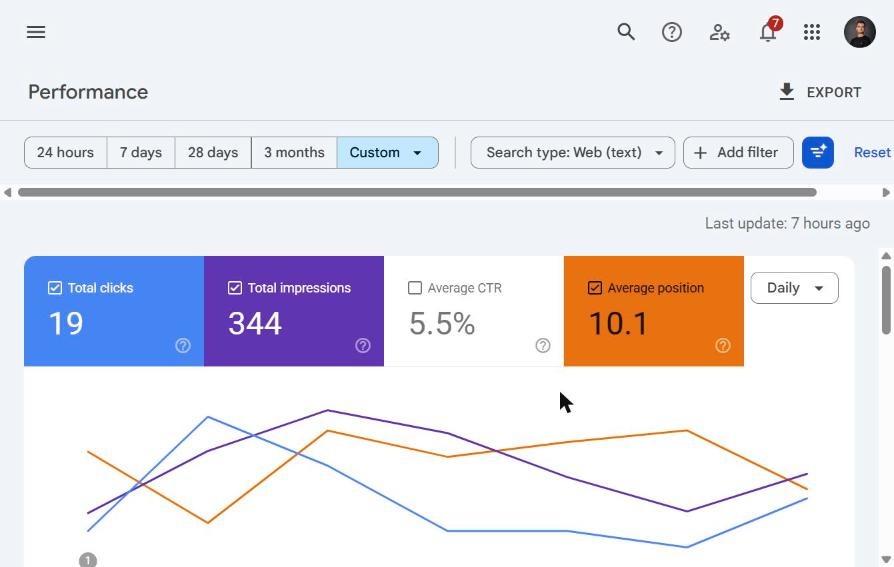
Launch week (3–9 Aug): 344 impressions, 19 clicks · Search Console, no filter
Lesson 1: the first 100 days belong to your brand
In 100 days, the site earned 216 clicks from Google, and the site is now ranking for 149 queries that are not branded.
Weekly clicks stayed between 6 and 24 the whole time; the launch week had 19. If you track one total number, the first 100 days look like nothing happened.
That's expected. Searches for the brand name come from referrals, LinkedIn, events, and existing clients looking you up. A new site makes those visits convert better (the company's main brand search went from 13 clicks in September to 25 in October), but it doesn't create them.
What to do with this: in the first quarter, measure brand search as its own number. Rising brand clicks show that your offline and social activity is working. They don't show what SEO is.
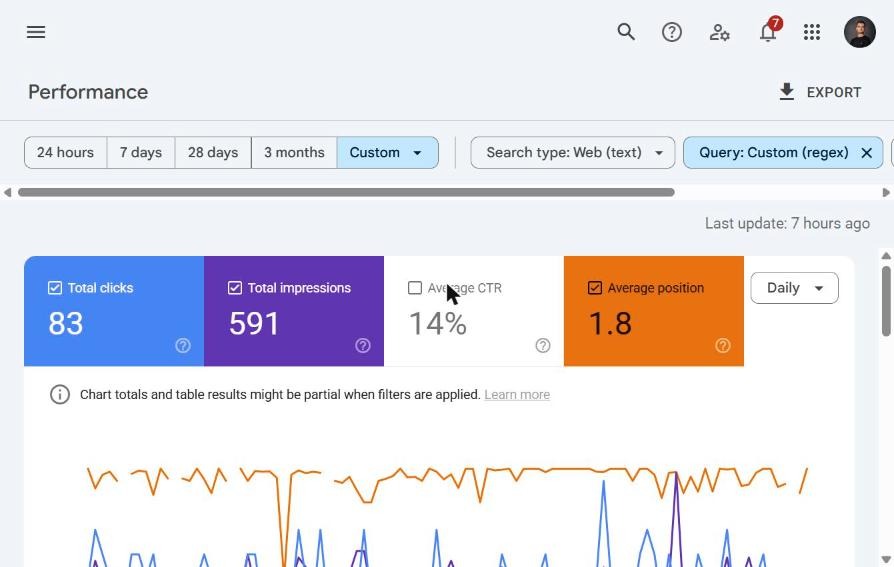
Brand searches, 3 Aug–10 Nov: 83 clicks at average position 1.8
Lesson 2: impressions arrive months before clicks
Search impressions not involving the brand name rose from 8 a week to 70-100 a week. The number of different queries the site appeared for went from 6 to 30-49 a week, and 149 in total. Clicks stayed at 0.
Google tests a new site by showing it for a growing set of related searches, mostly low on the page, before trusting it with page-one placements. The biggest query, "real estate fund administration", appeared 107 times. "Private debt accounting services" reached position 20.
Early on, the number of different queries you show up for is the leading indicator. Clicks follow once positions cross into the top 10, and in finance that takes longer than 100 days.
What to do with this: report how many different queries you appear for, and where they rank, not just clicks. If that number is growing, the work is on track even while clicks are at zero.
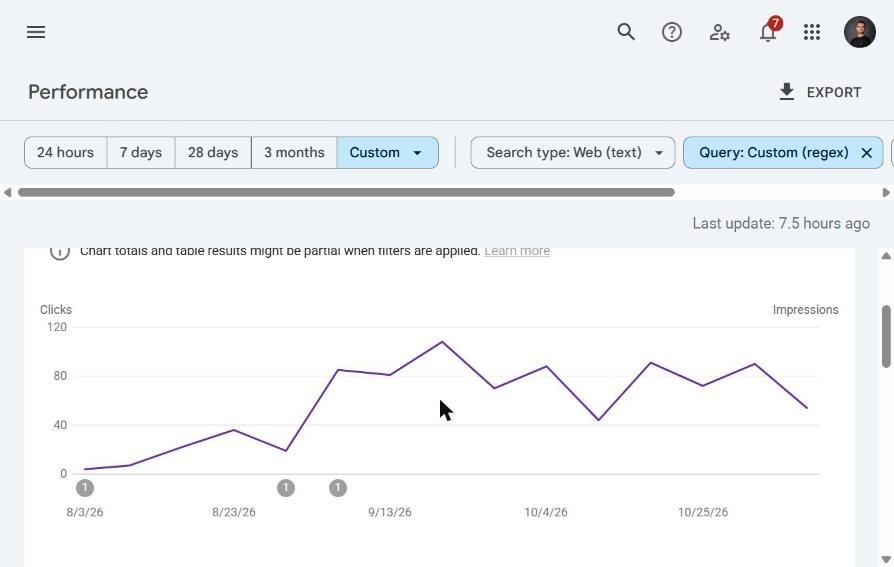
Weekly impressions from non-branded searches, 3 Aug–10 Nov
Lesson 3: location pages rank before service pages
The five market pages (India, UK, Netherlands, Singapore, UAE) reached positions 6–11 within about six weeks of publishing. The fund administration pages are still at 15–50.
The difference is competition. "Fund administration" is contested by global administrators with decades of authority. "Setting up a fund in the UK from Singapore" is a narrower question, and fewer firms answer it well.
What to do with this: a newer site should start where the field is thin: specific markets, specific routes and specific situations. The broad category terms come later, once those narrower pages have built up authority.
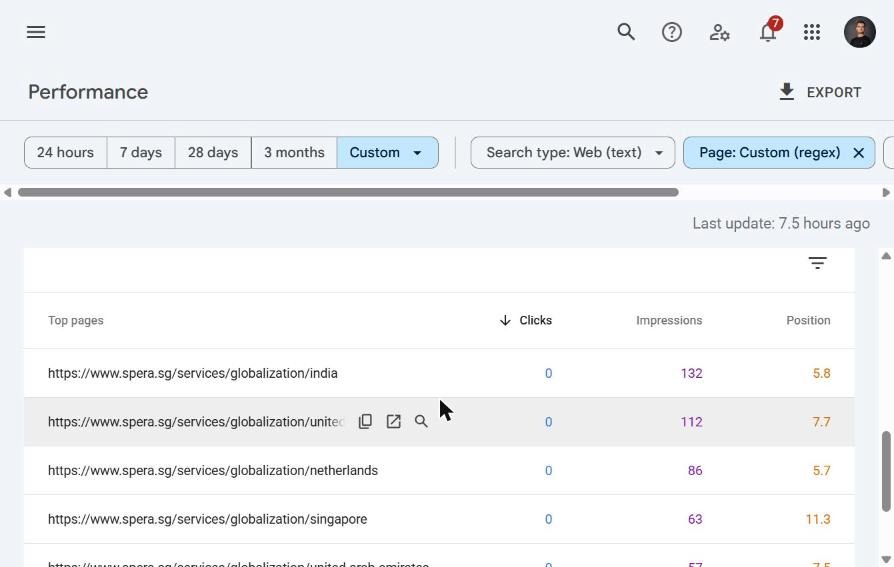
Market pages in October: positions 5.7 to 11.3
Lesson 4: in finance, trust signals come before traffic
Google holds financial content to a higher standard ("Your Money or Your Life" in its guidelines), and AI assistants are cautious about which firms they recommend. Before traffic, both look for evidence that the firm is real and is who it says it is:
- Registered entities, licence references and office addresses that match public records exactly
- The same facts on every page and every directory profile
- Structured data (Organization, Service and FAQ schema) that states those facts in a form machines can read
- FAQ sections that answer the questions buyers actually ask
After FAQ sections were added and the pages resubmitted in late September, impressions rose on all six market pages within the same few weeks.
During the audit, we also found office details on the site that didn't match company records. Small inconsistencies like that are exactly what makes search engines and AI models hesitate.
What to do with this: before launch, check that every legal and contact fact matches the public record, and fix the website and every directory listing together.
Lesson 5: AI assistants and directories are already lead channels
The site received 5 enquiries in its first 100 days:
The numbers are small, so we won't claim ChatGPT converts eight times better than Google. But two of the five enquiries came from channels many firms don't track at all: an AI assistant and a directory listing. Bing's AI answers also cited the firm 15 times in September and 22 times in October.
Buyers of financial services increasingly ask an assistant first ("who handles fund administration in Singapore for a Dubai fund?") and visit the site to check the answer.
What to do with this: in GA4, report AI assistant traffic as its own channel. Keep directory profiles complete and consistent with your website. Check what ChatGPT and Perplexity say about you every month.
Lesson 6: clean your data, or you'll mislead yourself
If we had reported the raw numbers, this would have been a much happier story, and a false one. Here's what we left out, and why:
- India was the largest country by impressions (1,900), but most of those searches were from job seekers looking for the firm's Bangalore office. That's interest in the firm as an employer, not buyer demand.
- The brand name is shared with at least ten unrelated companies. Searches for the bare name were mostly people looking for someone else, so we report them separately from brand searches.
- Staging-site visits were in the analytics: 141 sessions in September alone, from the team reviewing the test site.
- 78 sessions were us, not visitors: 44 from Google Tag Assistant debugging and 34 from Search Console's own tools.
- Data-centre bots that showed up as a single city with 4-second visits.
Together, these would have overstated buyer interest by a wide margin. Most launch reports don't remove them.
What to do with this: before your first report, filter out staging hosts, internal tools, and bot cities, and split brand-name searches that are ambiguous from ones that clearly mean you.
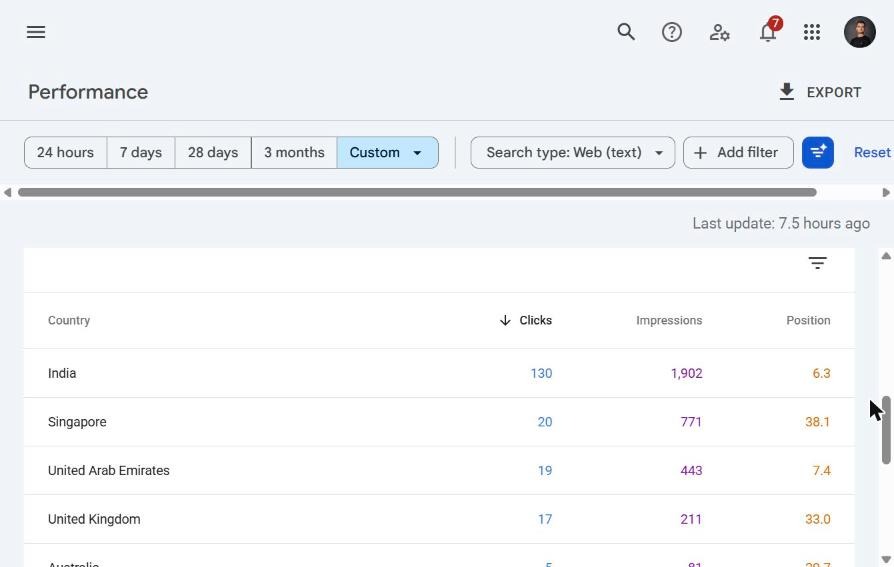
Impressions by country, 3 Aug–10 Nov: India 1,902
Lesson 7: migrations cost rankings
On day 91, the site moved to a new platform (Webflow to Framer) and to the bare domain. Every current page loaded fine. But 15 old addresses that Google still showed in results started returning "page not found", including the original CFO service pages and the legacy .html pages from before launch.
The pages that moved cleanly kept their rankings. Comparing the same searches before and after the move, most held or improved: "private debt accounting services" went from position 19 to 11, "venture capital fund administration" from 21 to 11. The damage was limited to the addresses nobody had listed.
What to do with this: before a migration, list every URL with Search Console impressions in the past 90 days, not just the pages in the current sitemap. Redirect each one to its new address in a single hop, and decide on www or the bare domain before the move, not after.
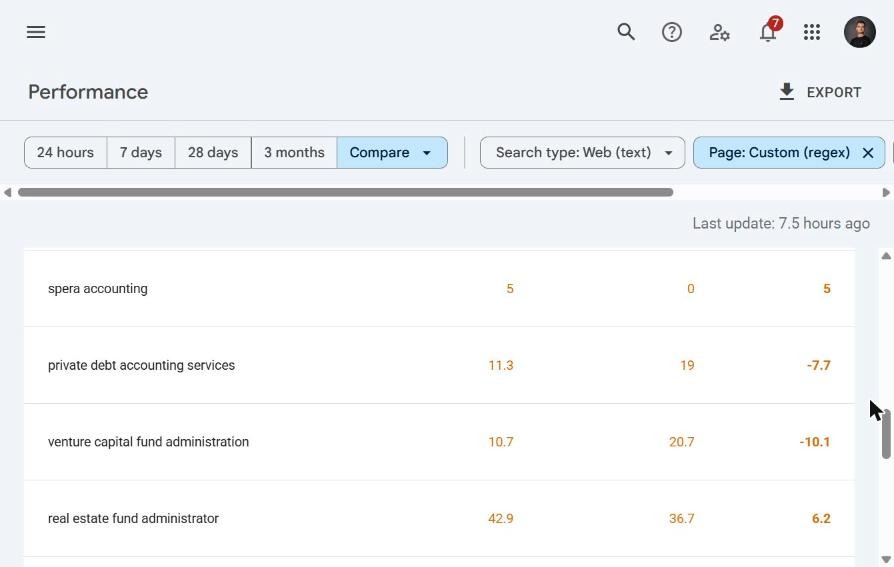
Position after vs before the 2 Nov move (2–10 Nov | 1 Oct–1 Nov | change)
A realistic 100-day scorecard
If someone promises page-one rankings for "fund administration" in three months, ask to see their day-100 data.
What's next
The next 80 days focus on demand the site can realistically win:
- Corridor pages. We measured search demand across 25 cross-border routes: about 14,190 searches a month. The UAE is the destination in 78% of them, and India → UAE alone is 42%. We'll publish the full numbers in a separate piece.
- A small paid search pilot on one route, so buyers reach the site while organic rankings build.
- Google Business Profiles for the staffed offices.
- One metric to judge it all by: cost per qualified enquiry.
We'll publish the day-180 numbers in March, whatever they show.
Launching or relaunching a financial services website? We'll show you what your first 100 days should look like, before you spend it. Talk to us
