"What's this going to cost?" is the first question almost every branding conversation starts with. It's also the hardest one to answer with a single number, because branding in 2026 isn't the same project it was a few years ago.
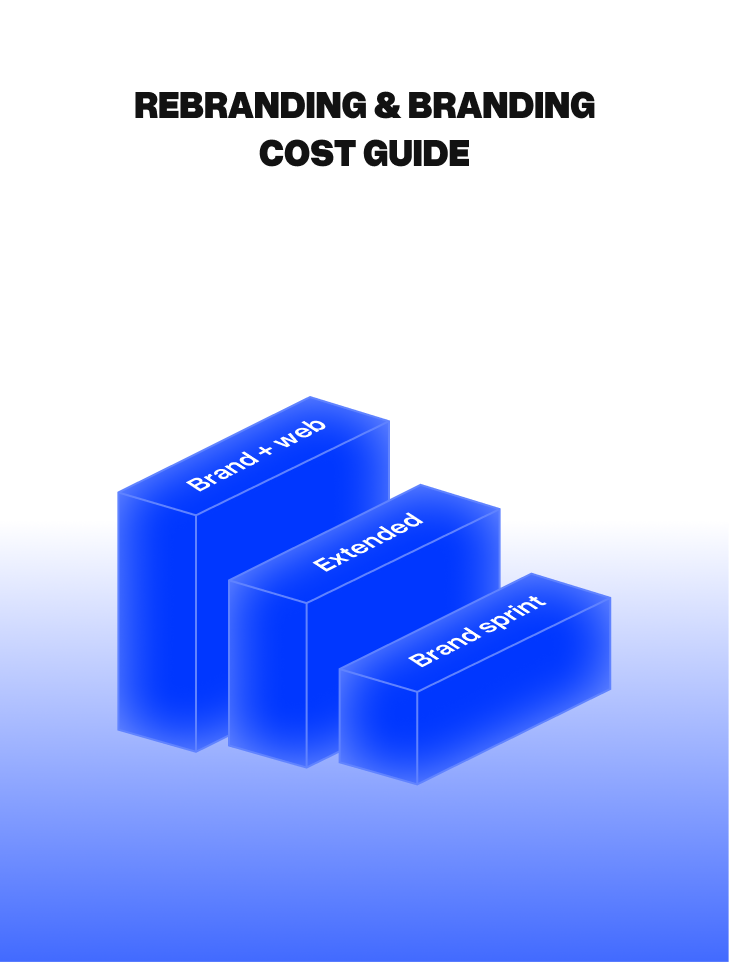
At Neue World, core branding starts at $4,500 for the Brand Sprint. Brand + web combined starts from $20,000. The more useful thing to understand, before any number matters, is why the scope of branding has gotten bigger and what that scope actually buys you.
How much does rebranding cost? At Neue World, branding starts at $4,500 for the Brand Sprint (logo, typography, guidelines, asset pack). Full brand + website engagements start from $20,000. Refresh and restructure work is quoted per scope, since it depends on what you already have. There's no branding requirement for a website-only project.
💡 Ready to get a number? Book a discovery call. It's free, and it's how we figure out which of these applies to you.
Why branding costs more than it used to
A few years ago, a branding engagement typically meant a logo, a color palette, and maybe some print collateral: business cards, a social template or two. That's still the entry point today, but it's rarely where the project ends.
Part of the reason is that building things in general has gotten faster. Standing up a product, a website, or a feature takes less time than it used to. As execution gets easier, the identity around a product carries more weight in how it's perceived. When the underlying build is no longer the hard part, perception and consistency carry more of the differentiation.
That shows up directly in scope. Brand guideline documents that used to run 10 pages often run 30 to 40 pages now. Not because clients ask for more pages for their own sake, but because the work itself goes deeper: instead of "here's a logo direction, build around it," briefs increasingly start with "here's where we're headed," which means the narrative has to be worked out before the visual system can follow it.
What's actually inside a branding project now
Then | Now |
|---|---|
Color palette (primary/secondary) | Full color system with rationale |
Typography, type hierarchy | Typography rules and usage guidelines |
Logo and lockups (monogram, full mark) | Logo and lockups, designed against a defined narrative |
Icons | Icon system, pattern library |
(not typically included) | Tone of voice |
(not typically included) | Brand narrative: defining what the company stands for and connecting that to where it's going next |
The narrative piece is the real shift. It requires understanding a company's existing philosophy and vision well enough to carry forward what still holds, then rebuilding the identity around where the brand is actually headed. The strategy has to be settled before the visual direction can follow.
Branding tiers and starting prices (2026)
Engagement | Starting from (USD) | What's included |
|---|---|---|
Brand Sprint | $4,500 | Logo, typography, brand guidelines, asset pack |
Branding only (extended) | Above $4,500, scope-dependent | Larger asset scope, more depth or applications, quoted per SOW |
Brand + Web | $20,000 | Branding scope plus website design and build |
Website only | Quoted separately | No branding included |
Refresh / restructure | Scope-dependent | Existing brand reorganised, refined, or updated |
These are starting points. What lands inside that range depends on print vs. digital, how deep the visual system needs to go, whether strategy (naming, positioning, messaging) is part of the ask, and whether a website is bundled in.
From scratch, restructure, or refresh: which one are you?
This is where most people get confused, so it's worth being precise about the three situations.
Starting from scratch. No existing brand to reference. The Brand Sprint is the natural entry point: logo, typography, guidelines, and an asset pack, giving a complete core identity to build from.
Restructuring an existing brand. Branding already exists, but it's inconsistent, outdated, or doesn't hold together as a system. This isn't always a net-new identity. It might mean a refined logo applied to a rebuilt guidelines document, or a new visual direction laid over existing foundations. The first step is auditing what exists, then deciding what needs to change versus what's worth keeping.
Refresh. Lighter than a restructure. The core identity stays, and specific elements get updated to feel more current. For the full breakdown of rebrand vs. refresh and how to tell which applies, see Rebranding vs Brand Refresh.
Refresh and restructure pricing is scope-dependent, similar to how a renovation quote depends on whether it's one room or the whole building. Get in touch and we'll scope it against what you're starting with.
Why the process matters as much as the price
At Neue World, projects are run directly: no account managers relaying feedback, no junior designers executing someone else's brief. When a direction needs to be confirmed or a decision needs to be made, it happens in the conversation, not after the question gets routed through internal alignment. That pace matters most in the early weeks, when a slow decision can compress everything that follows.
It's also why discovery calls are free and selective. The goal isn't to move someone into a pipeline. It's to establish, before either side commits, whether the scope, timeline, and working relationship are actually a fit. Projects tend to go better when that conversation happens first.
If a project moves forward, the onboarding proposal reflects it: up to 20 pages covering current assets, pain points, and open questions, which becomes the reference document the team works against for the rest of the engagement.
What a 3-month branding project actually looks like
Most engagements run roughly three months, structured like this:
Discovery (free). No charge, and deliberately selective. The goal is confirming fit before scoping begins.
Onboarding and proposal. Once a project is scoped, the proposal covers current assets, pain points, and open questions in detail. It becomes the reference document the team works against for the rest of the engagement.
Kickoff week. One to two calls to close the gaps the proposal couldn't capture, the details that only surface once both sides start working together.
Month 1: Foundation. This is where most of the groundwork happens: auditing current assets and existing philosophy, running two to three concept iterations, and locking the color palette, typography, brand narrative, and logo direction by month's end. The rest of the engagement builds from what gets decided here.
Months 2 to 3: Refinement. Building out the full system against the locked foundation: applications, guidelines depth, and, if it's a combined engagement, the website.
Timelines can compress when information flows quickly and decisions get made without long delays, but three months is the typical baseline for a full engagement. Projects with slower feedback loops run longer, sometimes meaningfully so.
Frequently asked questions
Do you charge for a discovery call? No. Discovery is free and used to confirm fit before anything is scoped.
Can I get a website without rebranding? Yes. There's no branding requirement for a website engagement. If a brand already exists and only a site is needed, that's scoped separately.
What's the difference between a rebrand and a refresh? A rebrand typically involves a bigger shift, sometimes including positioning or narrative, along with a restructured visual system. A refresh is lighter: it updates elements of an existing brand without overhauling it. See Rebranding vs Brand Refresh for the full decision framework.
Why does brand + web start at $20,000? Because it covers two full projects running together, brand design through to a designed and built website, priced as a combined scope rather than two sequential ones.
What if branding already exists but needs work? Depends on the state of it. If it needs to be reorganised or refined as a system, that's restructure work. If it just needs a lighter update, that's a refresh. Both are quoted after understanding the starting point.
Why do timelines vary between projects? Mostly the pace of decisions and how complete the information is at kickoff. Projects that move quickly through Month 1 tend to stay on the three-month baseline. Slower feedback loops extend it.
💡 If you know roughly what's needed, book a discovery call and we'll give you a proper quote. If it's still unclear whether the right move is a brand, a refresh, or just a site, that's exactly what the discovery conversation is for.
