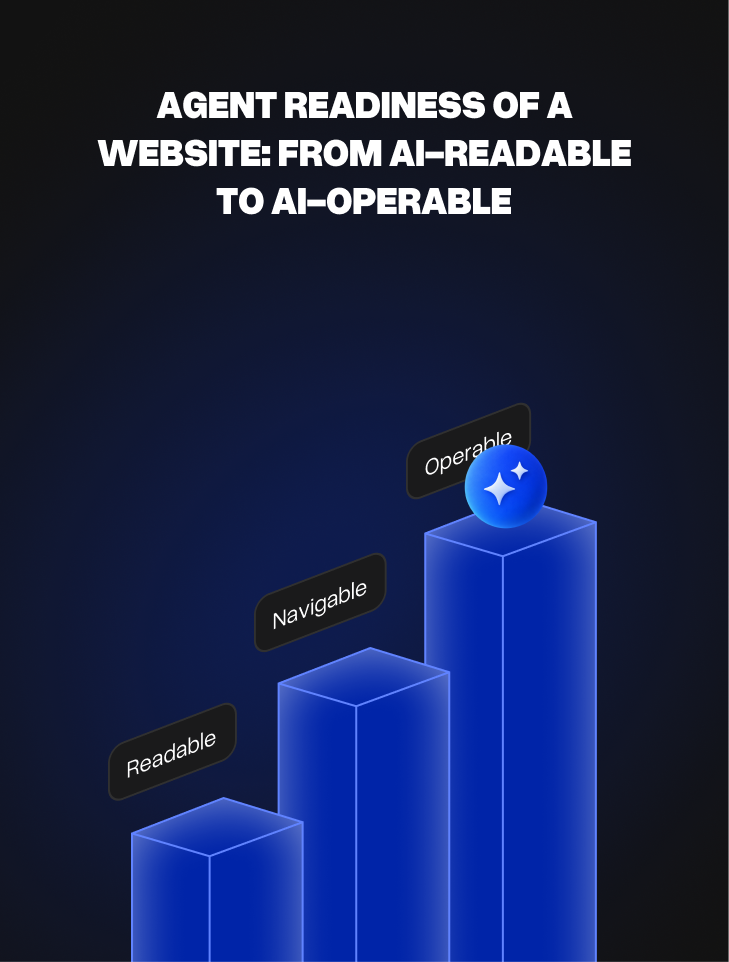
From AI-Readable to Agent-Operable
Most AI-readiness checks focus on whether AI can access and understand a website: whether AI bots are allowed in, and whether the content can be extracted correctly.
But that is only half the picture. AI systems are becoming increasingly capable of browsing websites, navigating pages, filling forms, and taking actions on behalf of users.
How Do You Test Agent Readiness?
One simple test is to give your website to ChatGPT or Claude and ask it to complete a task. You can then verify whether the interaction actually worked.
The problem is that this only tells you whether one AI system can complete one task. It doesn’t tell you whether other agents can use the website, or how an agent will behave when it needs to browse and interact with multiple websites to complete the same task.
Testing Agent Readiness
This is where emerging frameworks such as WebMCP become interesting. Developed by Chrome and currently in beta, WebMCP proposes a standard way for websites to expose actions and capabilities that AI agents can interact with.
See how to set up WebMCP here: https://www.flozi.io/blog/add-webmcp-webflow
How Neue World Builds Agent-Ready Websites
Page Structure
Define the page intent, user journey, and key touchpoints. Test the structure with different AI models to see whether they interpret the page as intended.
Navigation
AI needs context to navigate reliably. We design navigation and page relationships so agents can understand where they are going and why.
Technical Implementation
Build with agent interaction in mind, including patterns from emerging frameworks such as WebMCP for actions like lead capture and navigation.
Deployment & Testing
Check technical SEO and accessibility before launch. After indexing, test the live website across different AI systems to verify that content is understood and key interactions work.
